
E-PROPS MANUFACTURING
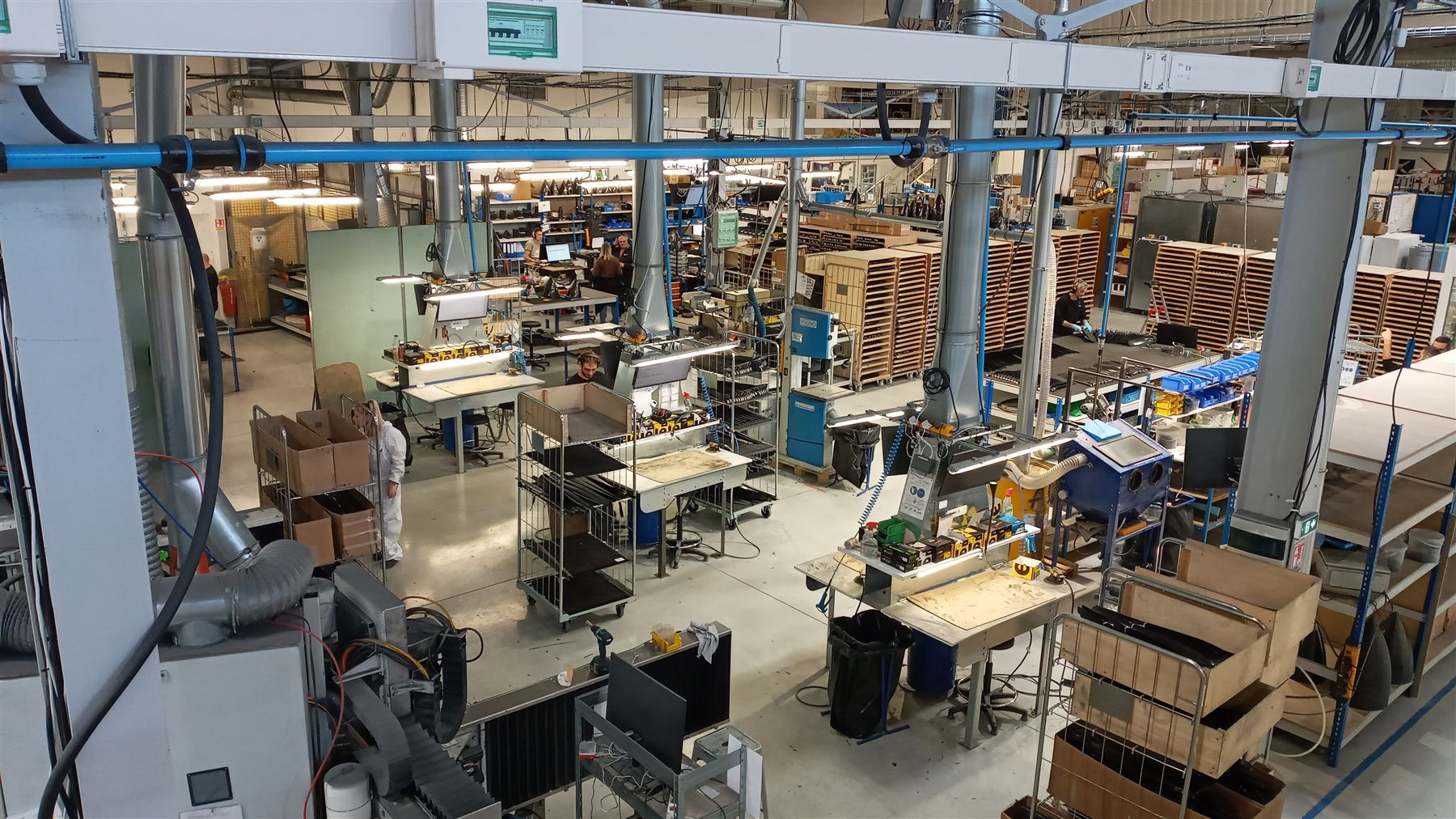
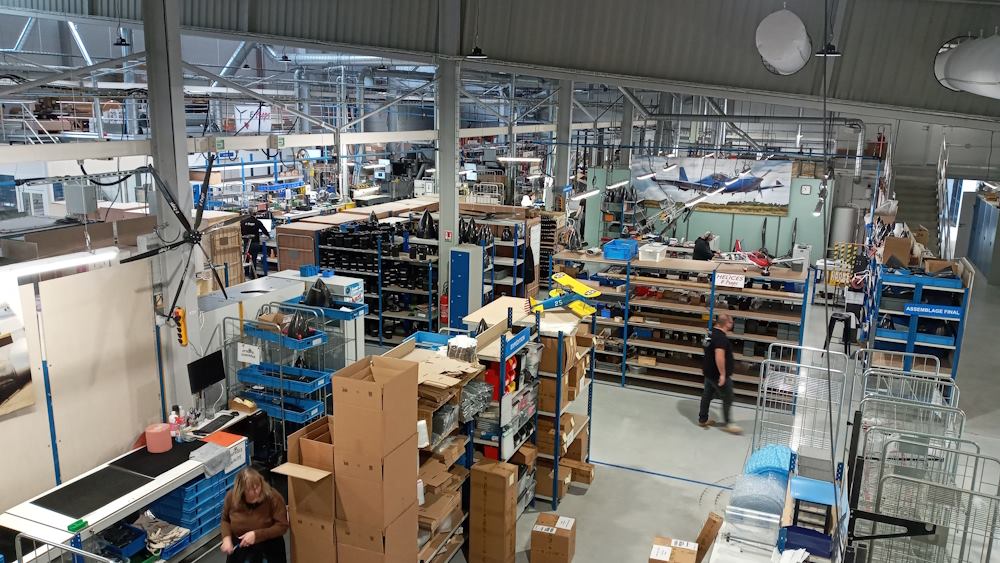
E-Props propellers are entirely designed and manufactured in France, in the Sisteron region of Provence. Every blade, hub and spinner is built to be as light as possible — and stronger than necessary — a balance that can only be reached by controlling the whole production chain, from raw material to finished part.
Unlike most propeller manufacturers, E-Props does not depend on external subcontractors, nor on a third-party software vendor, for its production management. The composite process, the finishing machines, and the traceability and ERP software that ties them all together are all developed and operated by E-Props’ own teams.
This post takes you through how it’s all done: the RTM molding process, the carbon-braid HCF construction of the blades, the manufacturing of hubs, spacers and spinners, and the quality and traceability systems — RFID, QR-code tagging, KANBAN, laser-scanning CNC finishing, and PALADIN, the great E-Props’ in-house ERP.
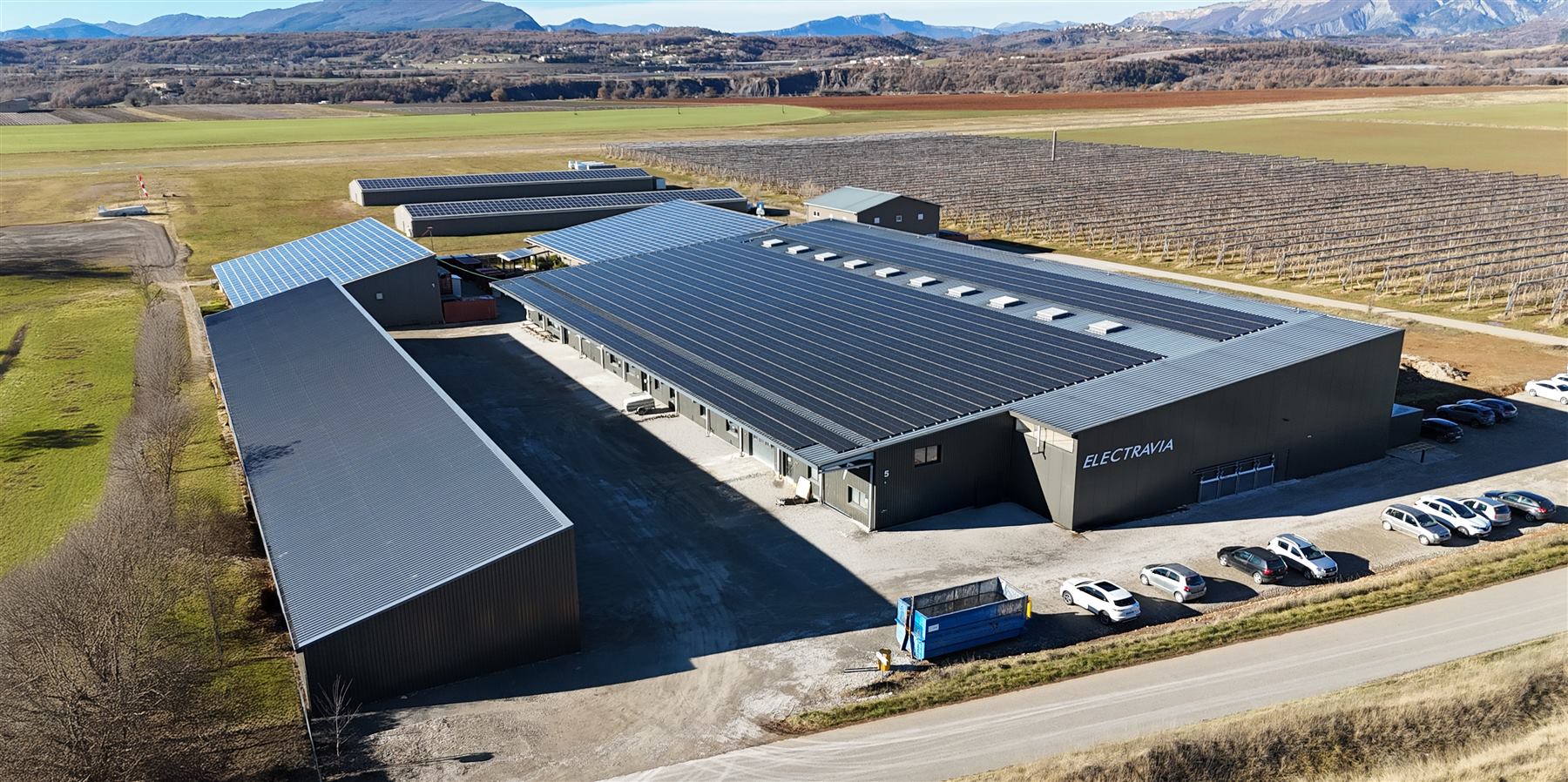
This ultra-modern factory building is fitted with a powerful, fully automated ventilation system designed to save as much energy as possible: a high-efficiency heat exchanger, adiabatic cooling using harvested rainwater, and thermal storage keep the workshop at a steady, regulated temperature — 25°C in summer and 21°C in winter. This climate-control system was entirely designed and built in-house by E-Props’ own engineers. The factory roof is also fitted with photovoltaic panels, with a total power of 500 kVA.
Resin Transfer Molding (RTM)
All E-Props parts — blades, hubs and spinners — are made using Resin Transfer Molding (RTM), a process also used by major manufacturers such as Airbus and Boeing for some of the critical, ultra-light carbon parts on airliners. It’s one of the best methods available for producing composite parts with large surface areas, complex shapes and smooth finishes: very good surface quality, very high fiber ratio, a wide range of possible reinforcements, low environmental impact, reduced manual labor, and — importantly — no direct contact between operators and raw materials.
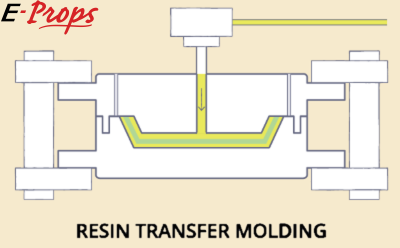
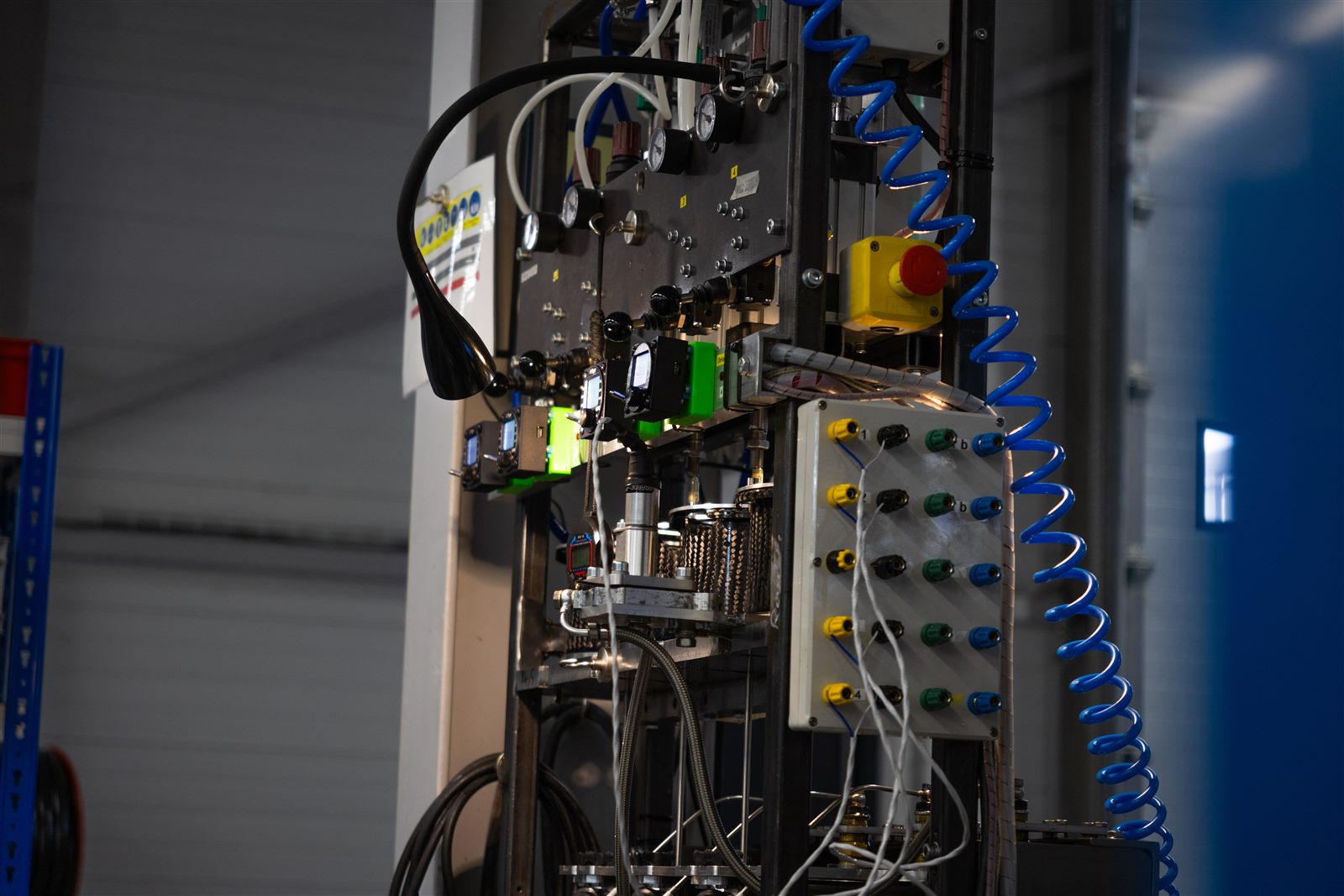
The process follows a strict temperature cycle: curing the carbon parts under controlled heat improves their mechanical properties, in particular their strength and resistance under high-temperature conditions.
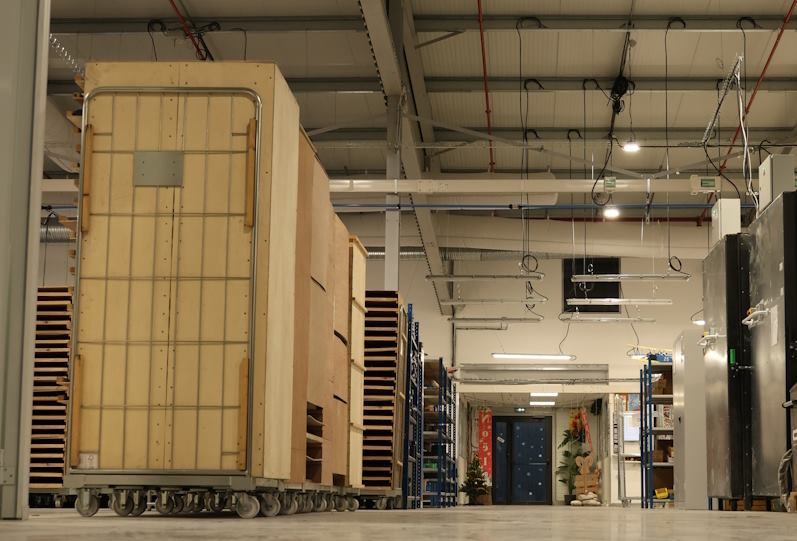
To guarantee strict quality control and full reproducibility, every component is precisely weighed at multiple stages of manufacturing — for example, seven separate weighings are performed for a single ultralight/aircraft propeller.
Two 8-axis machining centres (and very soon three), designed and built by the E-Props team, perform the dimensional analysis, rectification and finishing of the carbon parts automatically, without ever removing the part from its fixture. A laser scanner — accurate to 5/100th of a millimeter — sweeps the part and identifies it against the production database; the machine’s tools then carry out all remaining finishing operations: deburring, cutting, drilling, sanding and polishing. Every step between the mold and the stockroom is fully automated.
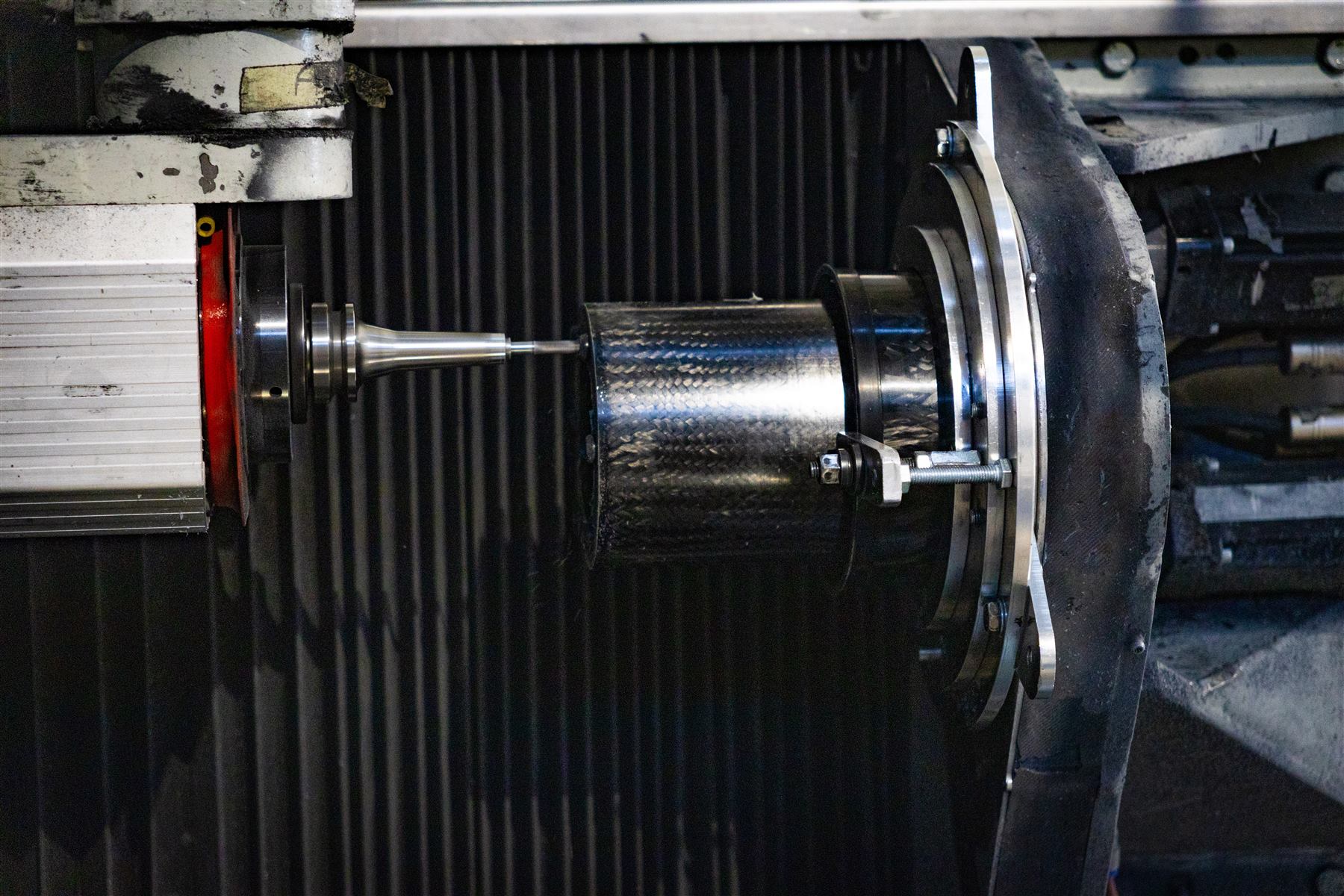
Carbon parts built with RTM and finished on these precision CNC centres are far superior, in structural properties, quality, lightness and appearance, to the conventional “half-shell” fiberglass parts used by many other manufacturers.
Carbon Blades — Helical Continuous Fibers (HCF)
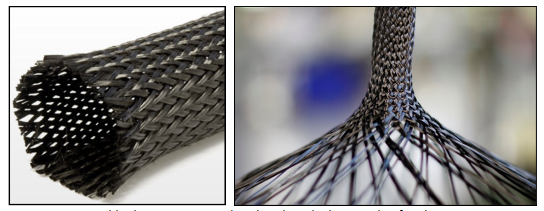
All E-Props blades are made of carbon braid and epoxy resin. Carbon offers an excellent compromise between rigidity and weight, and using a single base material is far superior to mixing materials — for instance blending fiberglass with carbon, a common way of saving on carbon, which is significantly more expensive than fiberglass.
The HCF process (Helical Continuous Fibers), developed specifically by E-Props, gives the 100% carbon + epoxy blade exceptional strength from leading edge to trailing edge and from root to tip. Unlike the “half-shell” process used by most composite propeller manufacturers, the carbon fibers are continuous between the upper and lower surfaces: the braid is woven like a sock over the blade. This greatly increases mechanical strength — no risk of leading-edge delamination, no cracking of the blades or the hub.
Why does this matter?
Building a strong carbon part means maximizing the fiber content and minimizing the resin content — fiber is roughly 50 times stronger than resin. E-Props parts have an exceptionally high carbon fiber ratio of 63%, compared with around 40% for a typical two-piece glued half-shell fiberglass blade.
| Material | Tensile strength |
|---|---|
| Carbon fiber | 4,000 MPa |
| Fiberglass fiber | 2,600 MPa |
| Epoxy resin | 80 MPa |
Epoxy resin is the resin of choice in aeronautics: very good mechanical and thermal properties, high fatigue resistance, good dimensional stability, and above all excellent adhesion to carbon fibers. The epoxy resin used by E-Props also includes a high-resistance UV additive (UVA and UVB).
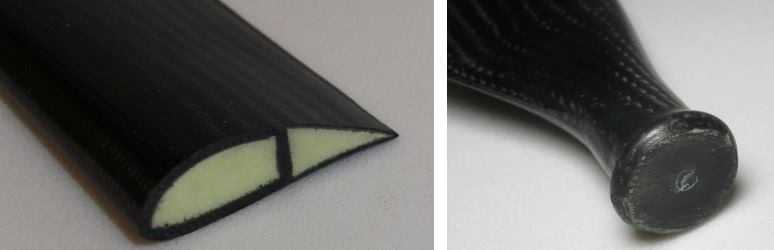
Key features of blade manufacturing:
- A foam core with an internal D-Box spar
- On the ultralight/LSA range, a titanium ring insert inside the blade foot
- 100% carbon construction — no metallic parts, hence no galvanic corrosion
- External leading-edge protection: a titanium shield 5/10 mm thick and 40 cm long
- A unique reference number on every blade, with an embedded RFID chip or QR-code, for full traceability
- Sets of blades balanced together to a strict static-moment tolerance
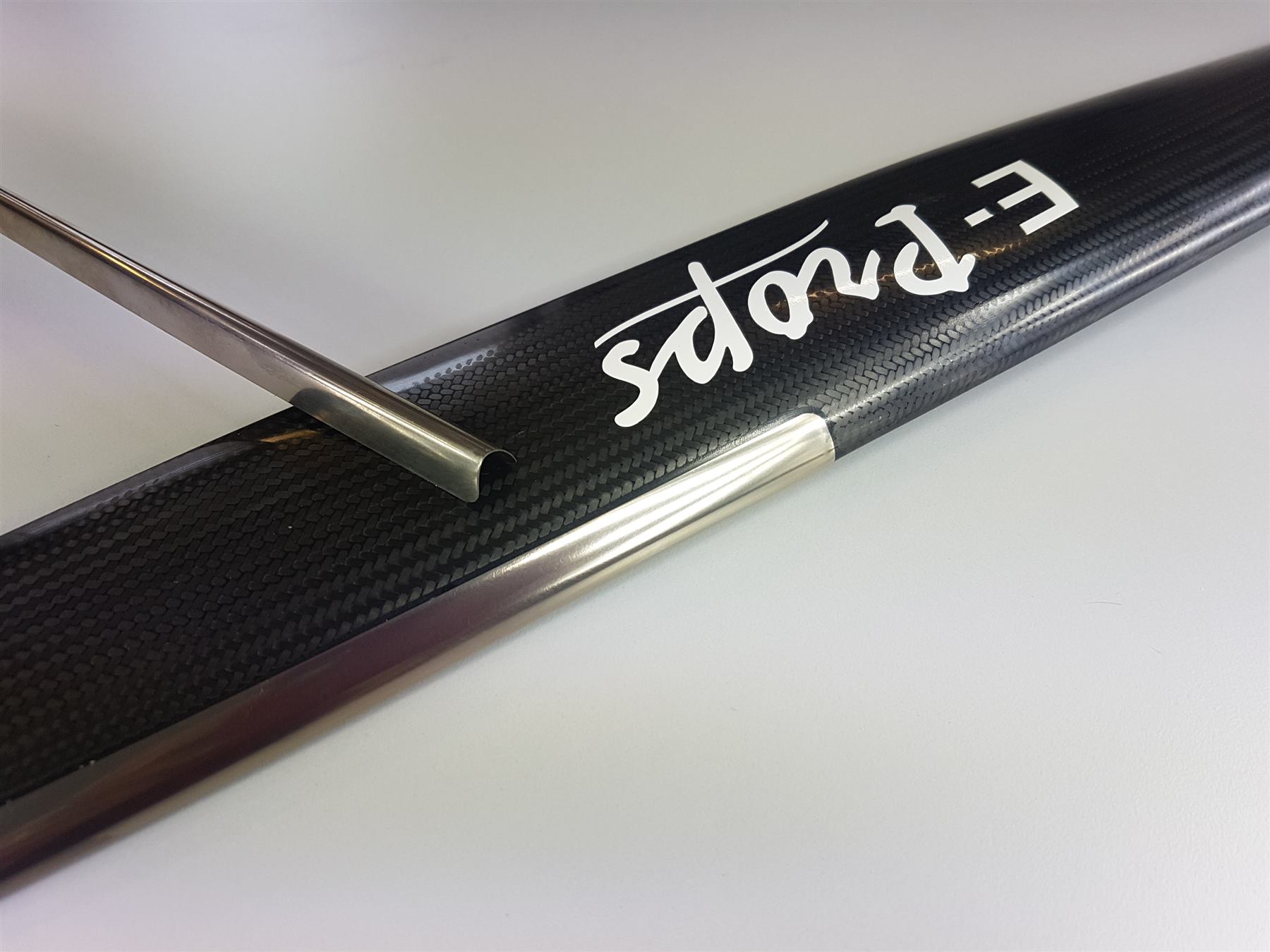
Because it uses a single anisotropic material — carbon braid built to the HCF process, combined with epoxy resin, with no parts in other materials — an E-Props blade has an unlimited service-life potential.
Carbon Hubs and Spacers
E-Props hubs are made of carbon fabric and epoxy resin. Carbon fabric offers high stiffness, high tensile strength, low weight, high chemical resistance, high temperature tolerance and low thermal expansion.
E-Props uses only carbon fabric supplied by major aerospace-industry manufacturers: more expensive, but offering far better quality and traceability. The RTM process is also used to mold the hubs, which are extremely strong and very light.
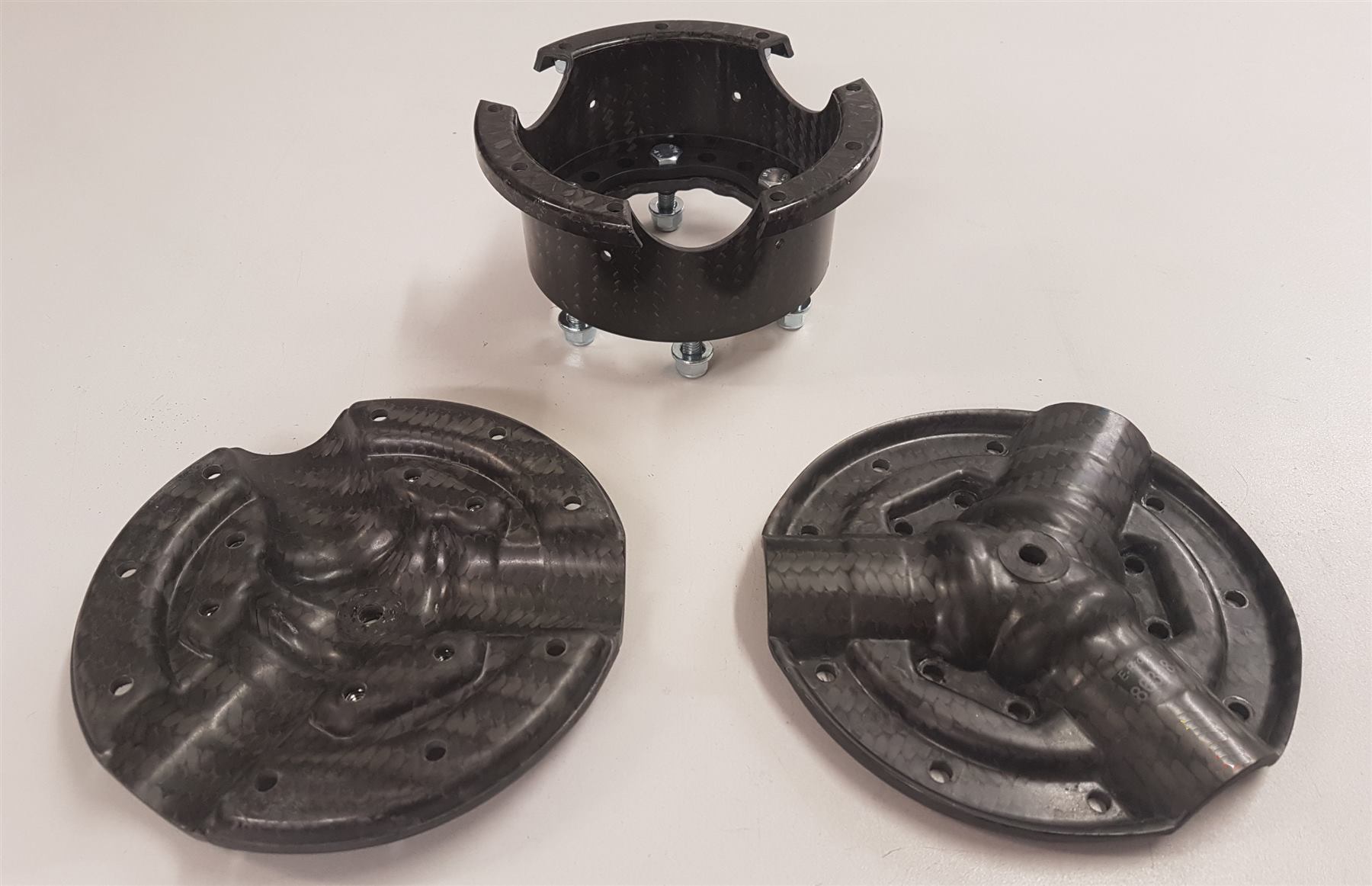
Key features: 100% carbon fabric — no metallic parts, hence no galvanic corrosion; a unique reference number on every hub component, with an embedded RFID chip; the hub is balanced together with its matching set of blades, to avoid vibration of the assembled propeller.
Spinners
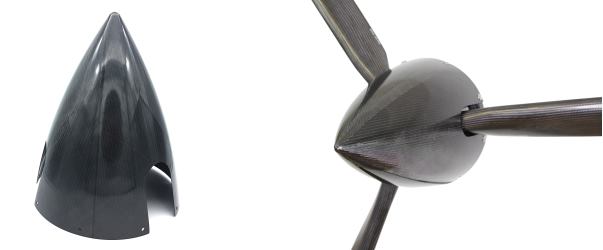
E-Props spinners are made of carbon fabric and epoxy resin, also molded using RTM. They are very light and very robust: 100% carbon fabric construction, a unique reference number on both the spinner and its flange with an embedded RFID chip or a QR-code. The spinner and flange are balanced together — with a small weight fixed to the spacer when necessary for perfect balancing (this wieght must never be removed).
Production Monitoring — RFID, QR Codes and KANBAN
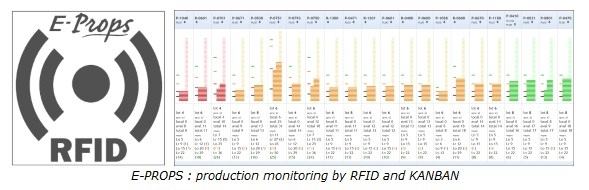
Every part — blade, hub component or spinner — carries its own RFID chip and a unique reference number, embedded from the earliest stage of manufacturing. Production itself is monitored using RFID and KANBAN methods, which optimize manufacturing quality, secure and streamline supplies, and provide real-time follow-up of the production process.
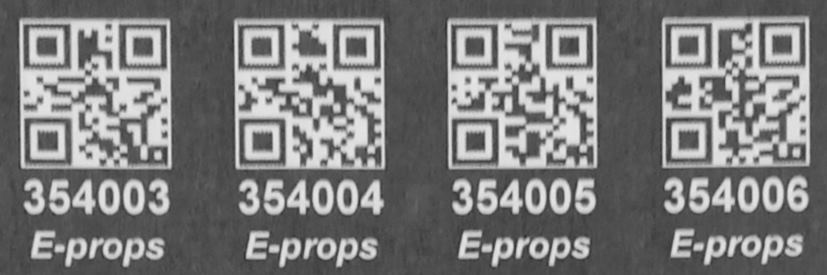
Alongside embedded RFID chips, every part is also identified by an individual printed QR code carrying its own unique reference number — a fast and simple way for any operator, or any customer, to look up a part’s identity and manufacturing history without needing an RFID reader.
ERP PALADIN — In-House Enterprise Resource Planning
Since 2014, E-Props has developed and operated its own Enterprise Resource Planning (ERP) system in-house: PALADIN. As E-Props approaches EASA POA (Production Organisation Approval) Part-21G certification — which requires perfectly complete traceability of every part and every process — PALADIN has been continuously extended to meet this requirement, and is now in daily use across the whole factory.
Developing and maintaining a full ERP system entirely in-house is unusual for a company of E-Props’ size, and represents a major strategic asset for the team: a dedicated group of four in-house software engineers builds and continuously improves PALADIN, keeping it tailored exactly to E-Props’ own RTM/HCF manufacturing process rather than adapting production to the constraints of a generic, off-the-shelf ERP package.

PALADIN covers, in a single integrated system:
- Production planning and scheduling
- Manufacturing follow-up and real-time tracking of every part’s position on the factory floor
- Purchase requests and supplier order follow-up
- Stock and inventory management
- Complete traceability of parts and materials, by batch and by individual serial number, via RFID chips embedded in every component
- Tracking of parts through every CNC machine step — resin injection, curing ovens, dimensional control, and finishing
- Quality control records for every part and every production step
- Allocation of parts and assemblies to customer orders
- Sales administration: quotations, invoicing and order management
- Shipment tracking
- Accounting, and cost accounting — the calculation of the real production cost of every part
- Human resources: staff training records and time-and-attendance
- Equipment management and maintenance follow-up for all production machines
- Monitoring of factory safety systems, such as sprinklers and alarms
Why does this matter?
Because PALADIN is designed, built and maintained by E-Props’ own engineers, it can evolve immediately alongside the manufacturing process, with no dependency on an outside software vendor’s roadmap or licensing terms. Every RFID-tagged part, every CNC machine cycle, every purchase order and every training record flows through the same system — giving E-Props end-to-end traceability from raw material to customer delivery, and the complete audit trail required for EASA POA Part-21G production approval. In effect, PALADIN is the operating brain of the entire factory.
Conclusion
E-Props operates an exceptional industrial tool — one that the company designs, builds and maintains entirely by itself, from the molds and the 8-axis CNC machining centres to the RFID/QR-code traceability system and the PALADIN ERP.
This fully integrated, in-house approach gives E-Props complete control over its quality, its costs and its continuous improvement, at every step of the process, enabling the production of more than 75,000 carbon parts every year.
More information, contact us : helices@e-props.fr


Post Comment
You must be logged in to post a comment.