
How E-Props Mastered Torsional Resonance: A Look at Let’s Go Aviate’s Latest Video
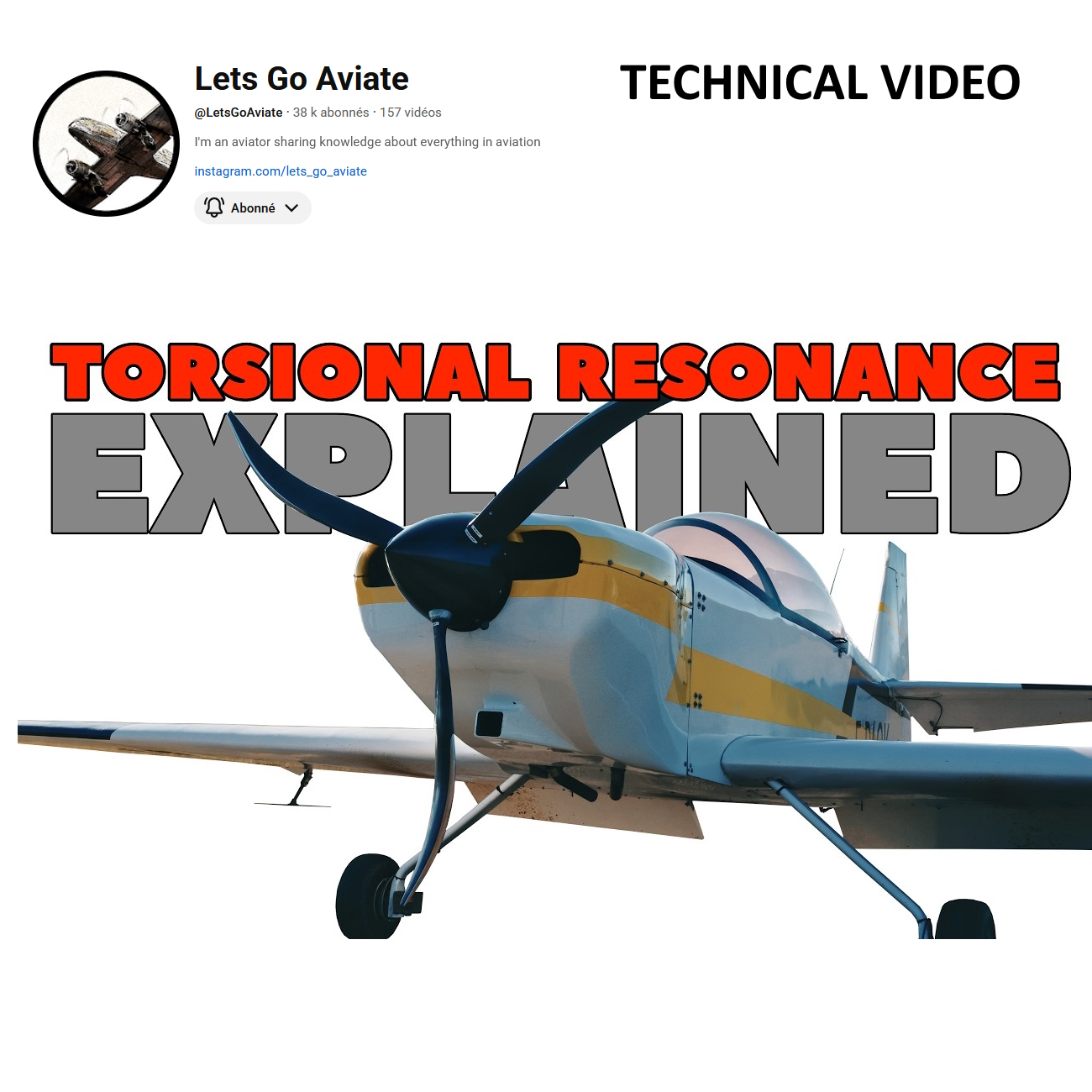
Watch the video “How E-Props Mastered Torsional Resonance with Ascalon Propeller“
A complex topic… made simple
In his latest video, Let’s Go Aviate dives into a highly technical subject:
torsional resonance in propellers
A topic usually reserved for engineers; yet here, it’s explained in a clear, visual, and engaging way.
The goal of the video is straightforward:
to understand why some propellers vibrate, lose efficiency, or even become unsafe; and more importantly, how E-Props solved this challenge with the Ascalon propeller.
The problem! torsional resonance
When an engine runs, it doesn’t produce perfectly smooth rotation.
Instead, it generates pulses (from combustion cycles), which create:
- torque fluctuations
- oscillations in the crankshaft
- stress transmitted to the propeller
This leads to torsional resonance.
And that’s where things can get critical:
- amplified vibrations
- loss of performance
- mechanical fatigue
- structural risks
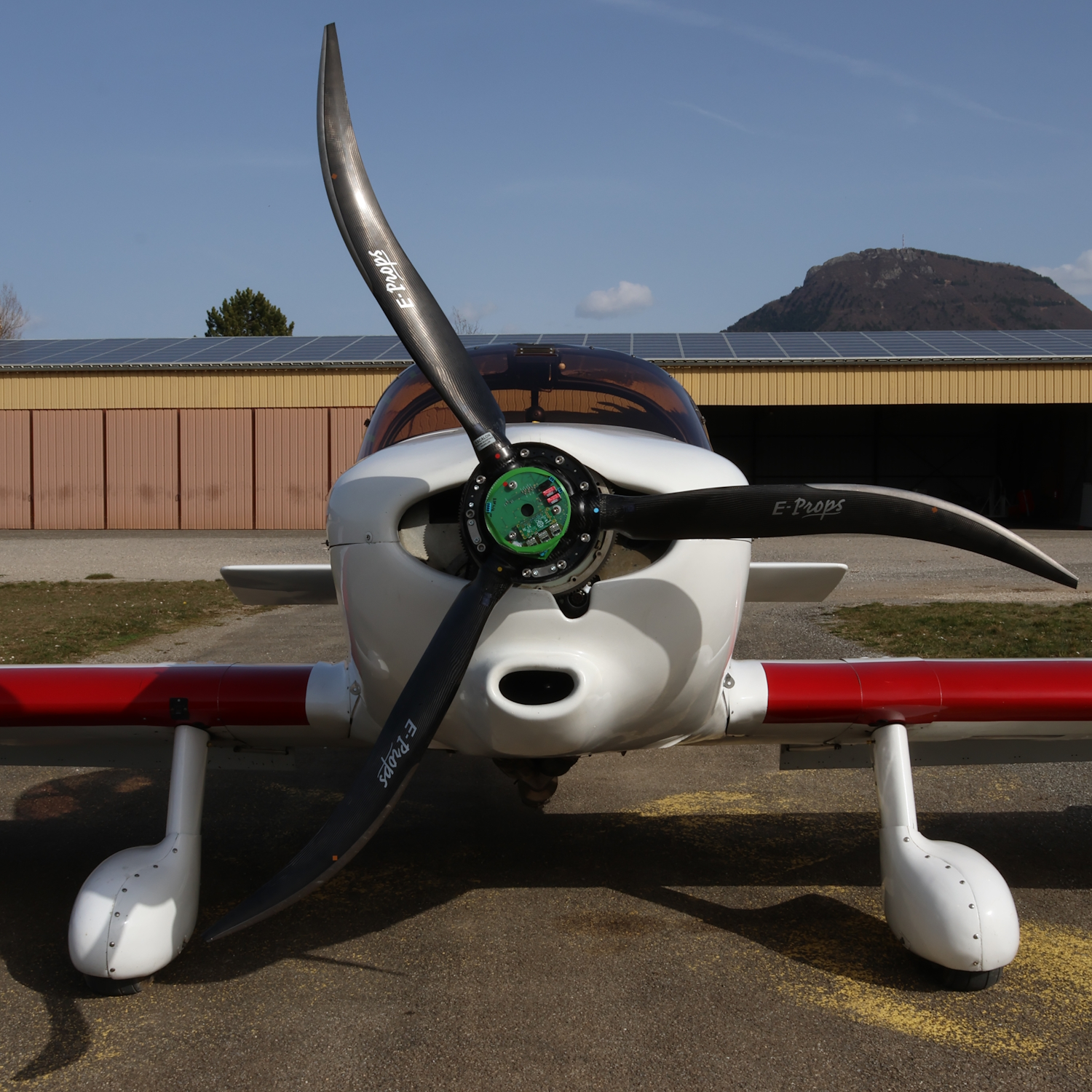
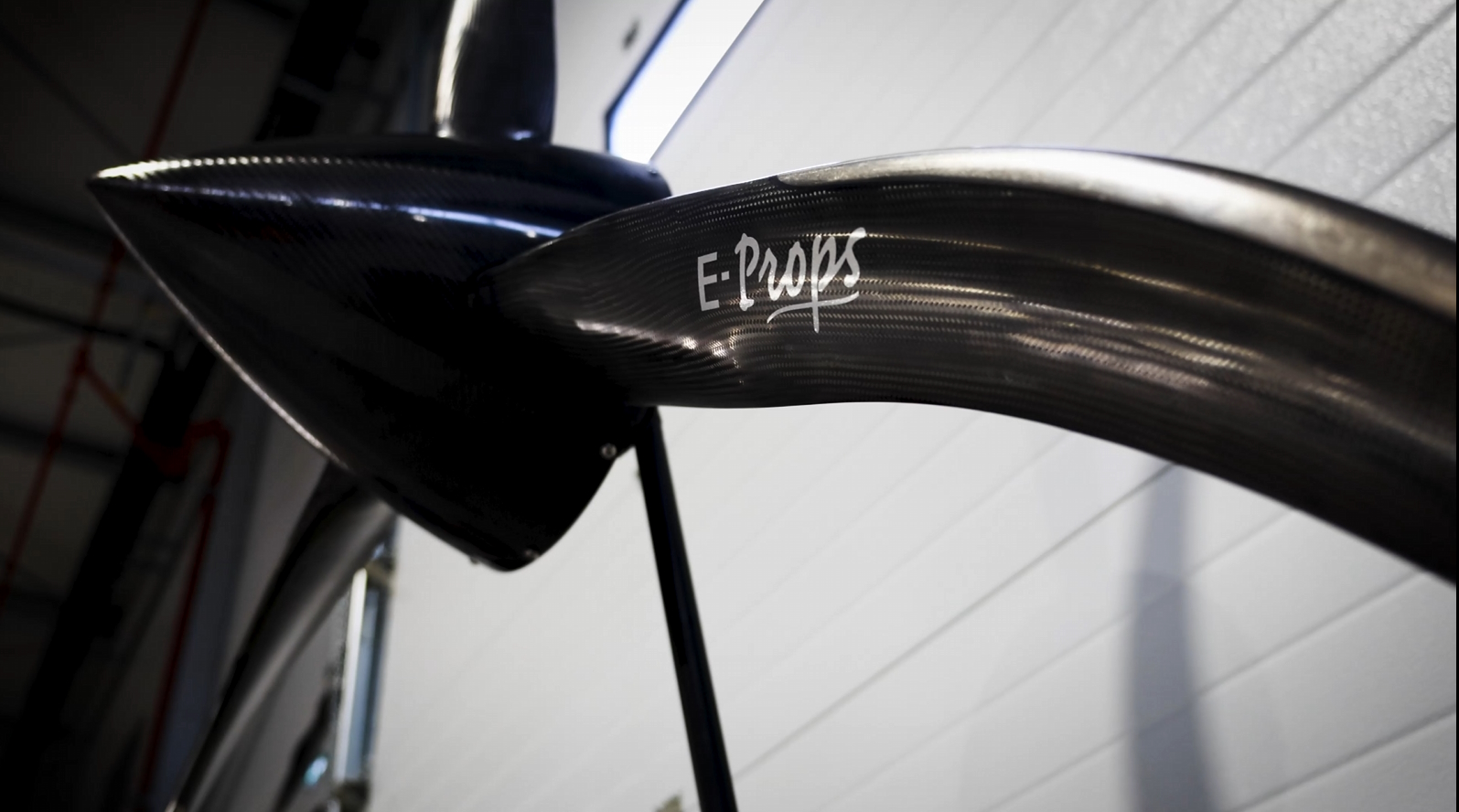
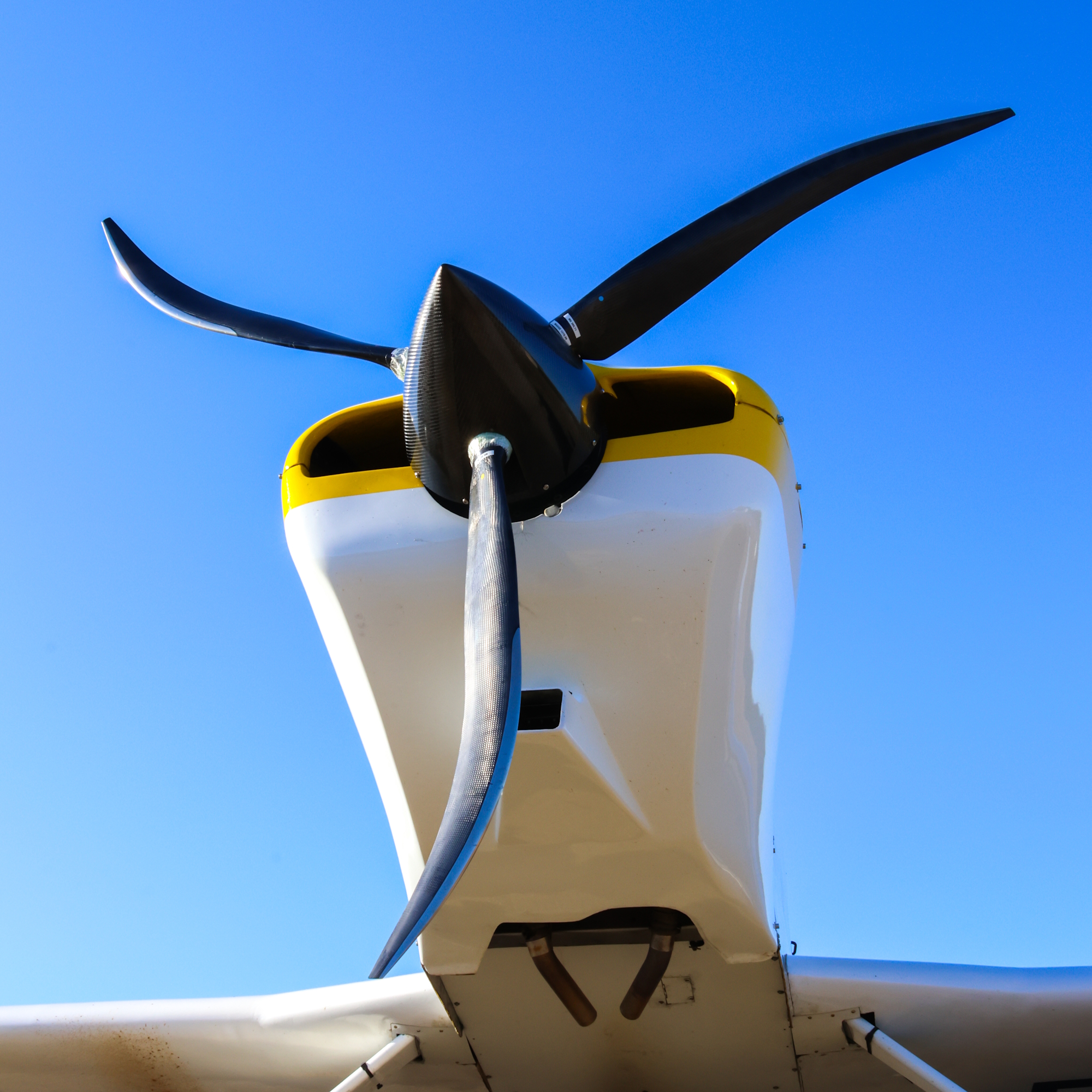
E-Props’ solution: the Ascalon
the video highlights the engineering work behind the Ascalon propeller.
The objective:
absorb, control, and manage torsional vibrations
Several key concepts are presented:
1 – A dynamic-first design approach
The propeller isn’t designed only for aerodynamics, but also for mechanical dynamic behavior.
2 – Controlled blade flexibility
Instead of being purely rigid, the blades are designed to actively absorb and damp vibrations.
3 – System-level optimization
The engine are propeller are treated as a coupled system, not as separate components.
A “constant speed” effect, without a governor
One of the most interesting points in the video:
The Ascalon delivers a constant speed-like behavior
without the need for a complex hydraulic or machanical system.
In practice:
- better adaptation to engine RPM
- optimized performance in climb and cruise
- reduced mechanical complexity
This represents a real shift in propeller design philosophy.
Why this video matters
This isn’t just a product showcase.
It delivers:
- rare and valuable technical insight
- clear explanation of real mechanical challenges
- a concrete example of innovation in aviation
Most importantly, it highlights something often overlooked:
Propeller performance isn’t just about shape; it’s about how it reacts to dynamic forces.
Conclusion
Let’s go Aviate strikes a difficult balance:
- Technical
- Accesible
- Engaging
The video shows that innovation in aviation doesn’t always come from adding complexity…
but from better understanding physics.
Key takeaways
- Torsional resonance is a major issue in aviation
- E-Props introduces an innovative approach with Ascalon
- “Constant speed” behavior can be achieved differently
- Technical education is key to understanding performance

Post Comment
You must be logged in to post a comment.