
Propellers and Moment of Inertia: A Number You Can’t Ignore
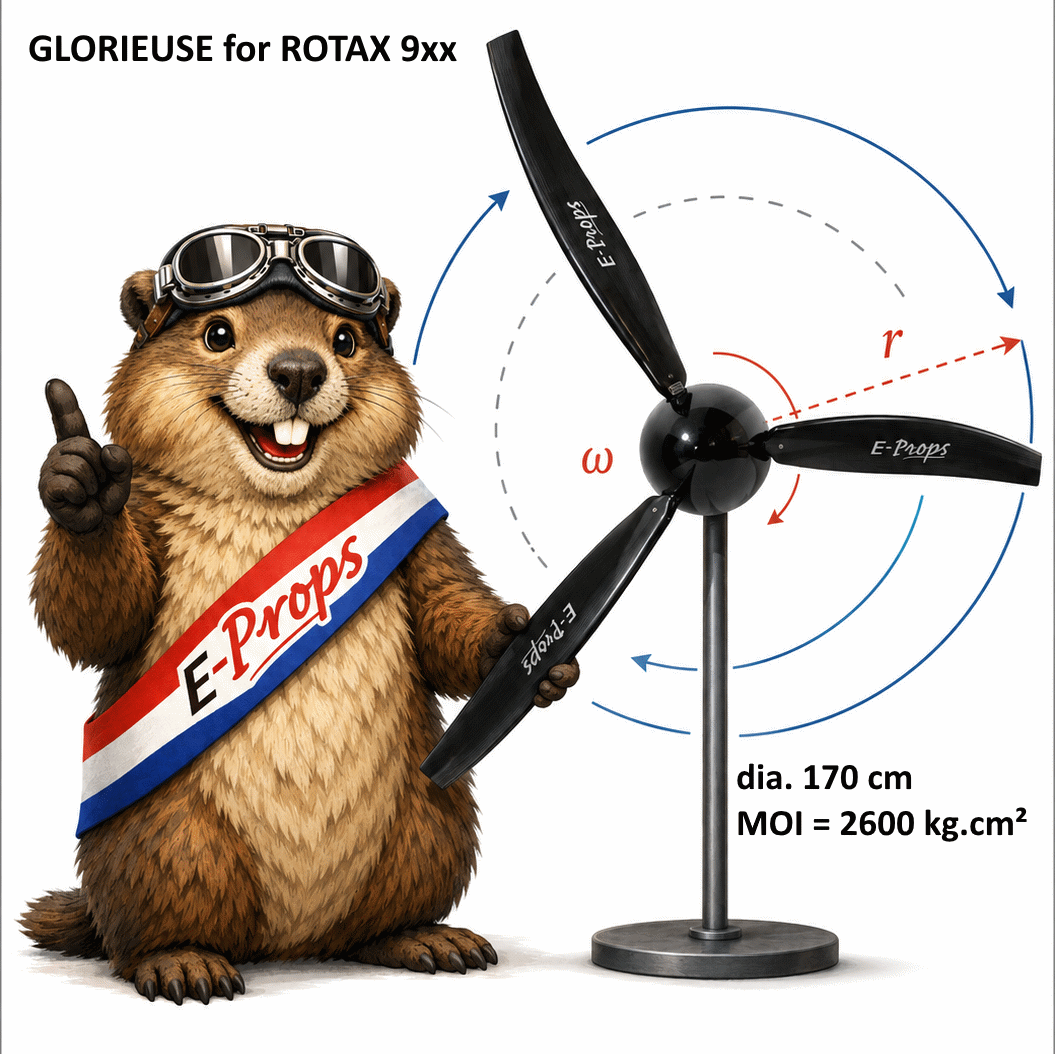
When pilots and aircraft builders choose a propeller, they usually think first about thrust, efficiency, or noise. There’s another number, less visible but just as critical, that determines whether a propeller and an engine will get along for the long run: the moment of inertia, or MOI.
What is the moment of inertia?
Inertia is simply an object’s resistance to a change in speed. For something moving in a straight line, that resistance depends only on its mass. But for something spinning — like a propeller — mass alone isn’t enough. What matters is how far that mass sits from the axis of rotation.
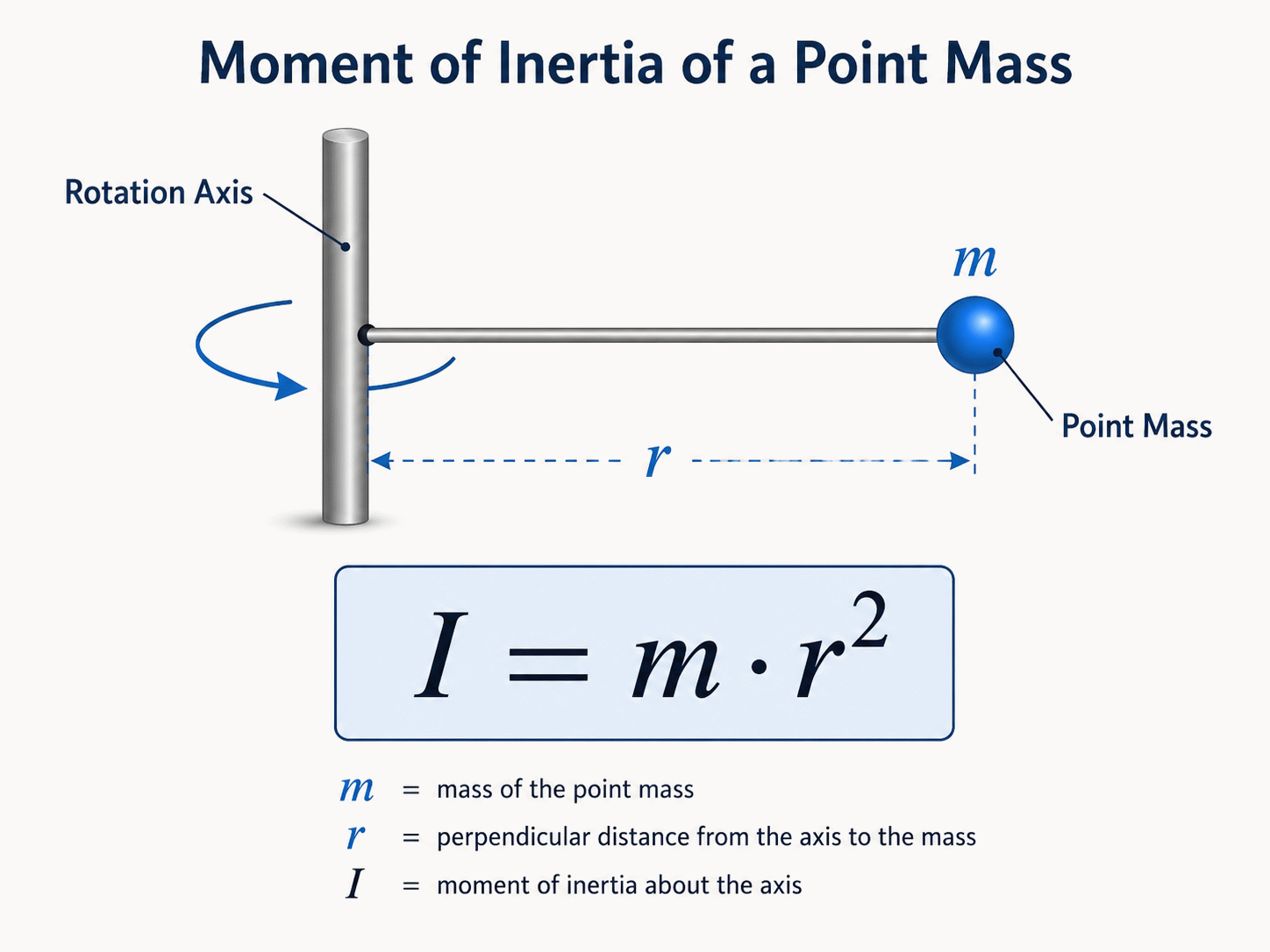
That’s the whole idea behind MOI, expressed in kg·cm²: distance from the axis counts far more than mass itself. A heavy hub sitting close to the axis barely adds any inertia, while even a small amount of mass out near the blade tips adds a lot.
Why it matters for your engine
Most aircraft piston engines rely on the inertia of their rotating assembly to keep the crankshaft turning smoothly between power strokes. The propeller is by far the largest rotating mass in that system — so its MOI directly affects how the engine, and its reduction gearbox if it has one, absorb the torque peaks generated on every cycle.
Fit a propeller with too high — or too low — a moment of inertia, and the consequences aren’t cosmetic: reduced service life for the gearbox, the crankshaft, or the propeller’s mounting hardware, and in extreme cases, outright failure. That’s exactly why engine manufacturers publish a minimum and maximum MOI range for each engine model, and why straying outside it typically voids the engine’s warranty.
The E-Props approach
At E-Props, the moment of inertia of every propeller is calculated at the design stage, then verified and measured on the finished part. The value is published for every model in our catalogue, so it can be checked against your engine manufacturer’s limits before installation.
Thanks to their light weight — the result of carbon construction and careful aerodynamic and mechanical optimization — E-Props propellers carefully respect both the maximum and the minimum moment of inertia limits recommended by engine manufacturers.

Post Comment
You must be logged in to post a comment.