
Why Titanium is the Best Choice for Propeller Leading Edge Protection
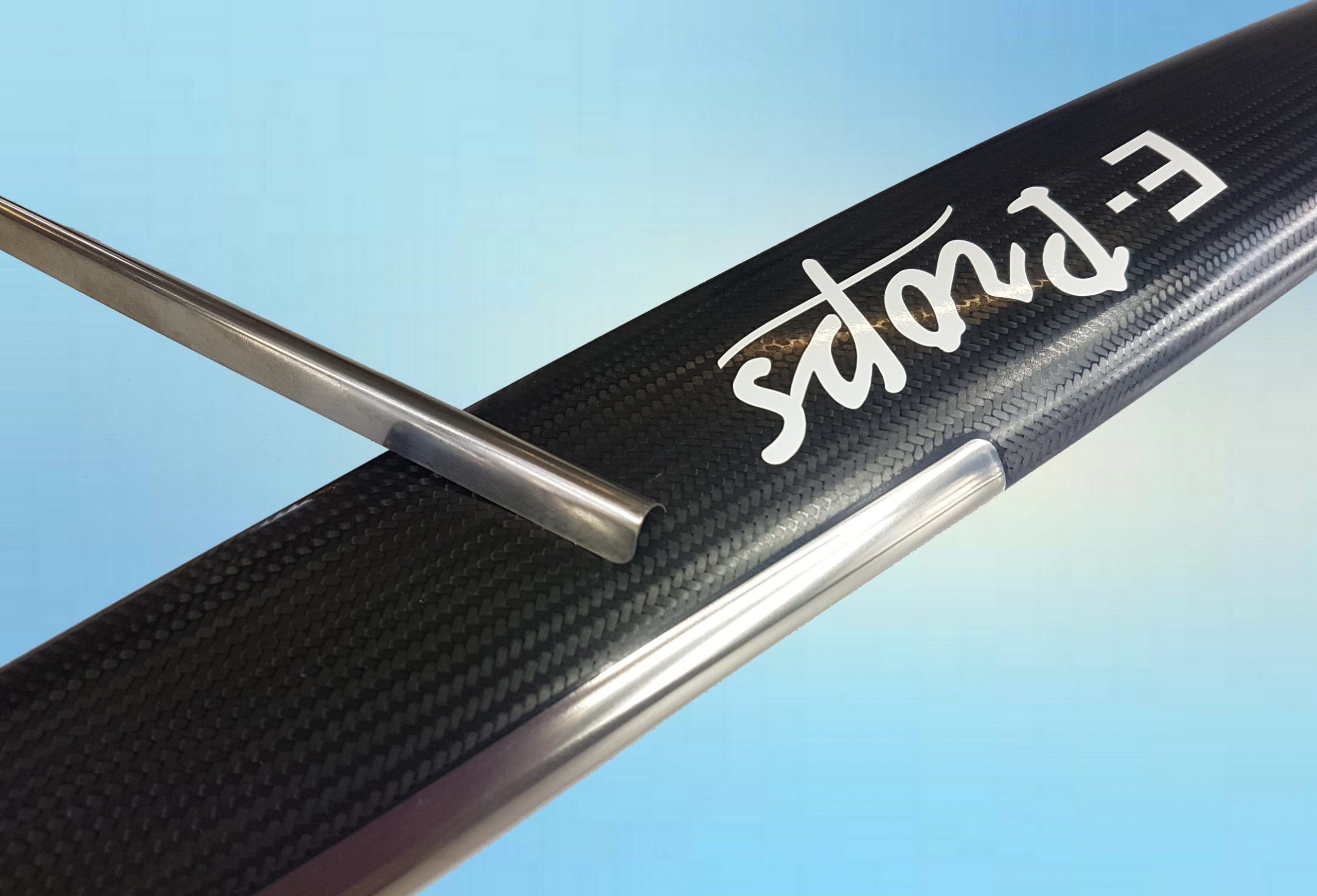
The leading edge of a propeller blade is one of the most exposed parts of the aircraft. It can be hit by small stones, sand, rain, insects, or other particles. Over time, these impacts can damage the blade surface and reduce its durability.
This is why many propeller blades use a metallic leading edge protection: a thin metal shield bonded to the front edge of the blade.
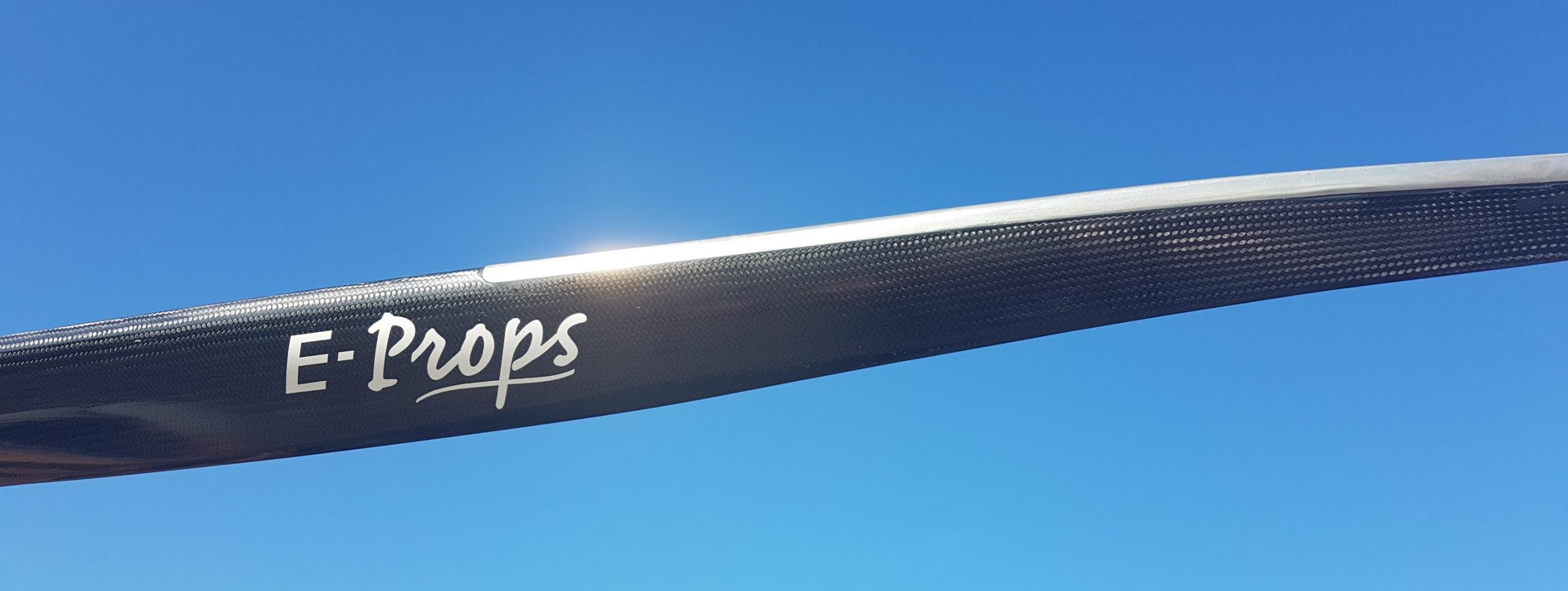
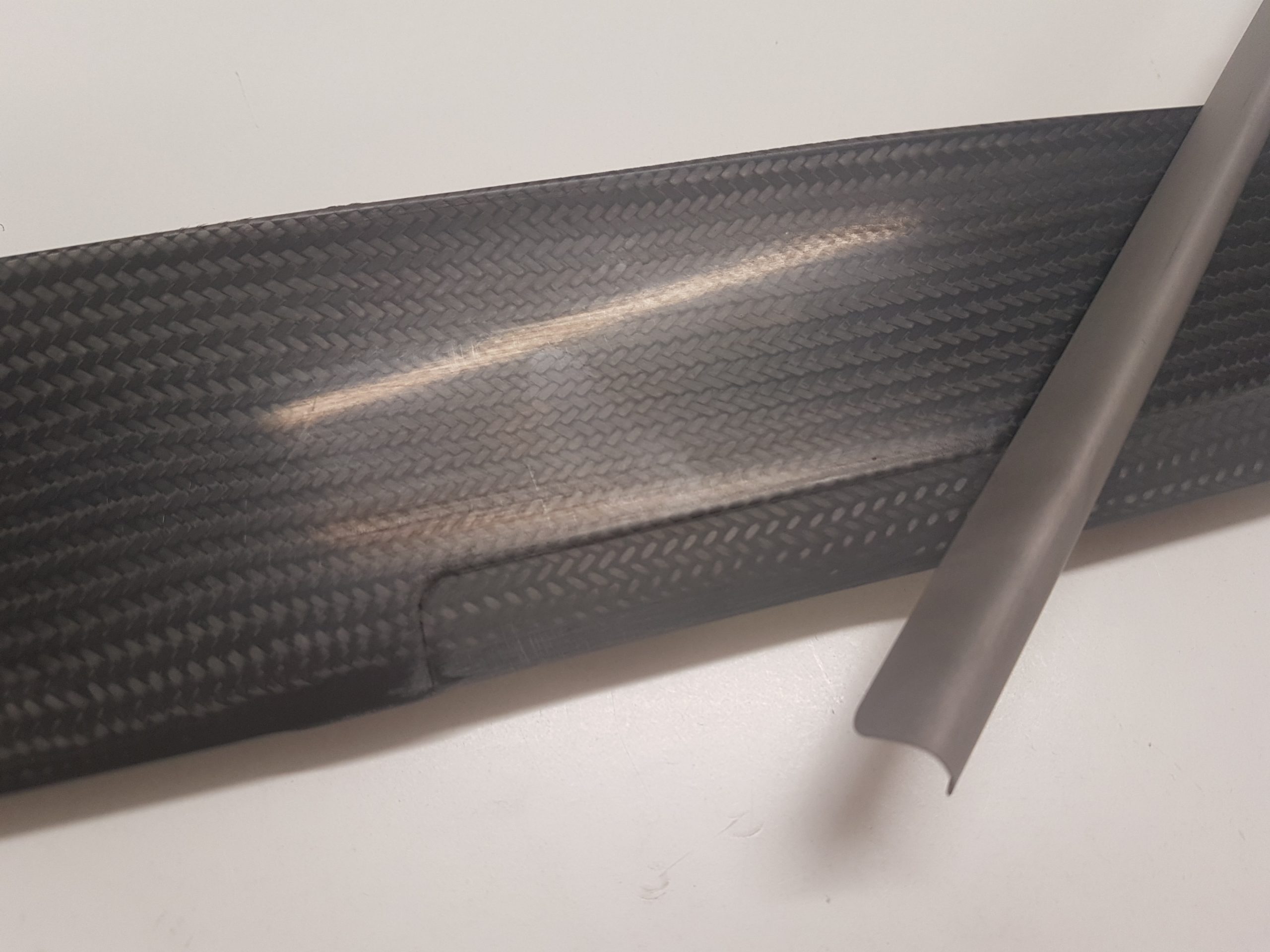
Since October 2019, E-Props has used Titanium leading edge protection on the V20 range of propellers. For propellers over 170 cm diameter, this protection is 0.5 mm thick and 40 cm long. The Titanium part is formed to match the blade profile, then bonded into a dedicated recess in the carbon blade.
Titanium is not used only because it is strong. It is also light, corrosion-resistant, and well suited to carbon composite blades.
Why Titanium works well on carbon blades
A carbon blade and a metal part do not react in the same way when temperature changes.
When a metal part is heated, it wants to expand. When it is cooled, it wants to contract. But when this metal part is glued to a carbon blade, its length is almost fixed by the carbon structure. Carbon fibre expands very little in the blade direction.
So the metal protection is “restrained” by the blade.
This creates internal stress in the metal part and in the bond line. The higher the metal expansion and the higher its stiffness, the higher the stress.
A simple estimate is: Stress = Young’s modulus × thermal expansion coefficient × temperature change
This is not a full engineering calculation, because the adhesive layer, the blade geometry, the thickness of the metal, and local flexibility also play a role. But it is a useful way to compare materials.
Simple comparison: Titanium, Inconel and nickel
For the comparison below, we assume that the carbon blade does not expand and that the metal strip is fully restrained. The table shows the approximate stress created in the metal protection for a 50°C temperature change.
| Material | Density | Young’s modulus | Thermal expansion | Estimated thermal stress for 50°C | Relative weight |
|---|---|---|---|---|---|
| Titanium Grade 2 | 4.51 g/cm³ | 105 GPa | 8.6 × 10⁻⁶ /°C | ~45 MPa | 1.0 |
| Inconel 625 | 8.44 g/cm³ | 206 GPa | 12.8 × 10⁻⁶ /°C | ~132 MPa | 1.9 |
| Nickel 200 | 8.89 g/cm³ | 207 GPa | 13.0 × 10⁻⁶ /°C | ~134 MPa | 2.0 |
The result is clear: for the same temperature change, Inconel and nickel can generate about three times more thermal stress than Titanium. They are also almost twice as heavy.
This does not mean that Inconel or nickel are bad materials. They are excellent materials for many high-temperature, marine, and industrial applications. But for a thin leading edge shield bonded to a carbon propeller blade, Titanium has a very interesting balance:
- low density,
- good mechanical strength,
- low thermal expansion compared with many metals,
- lower thermal stress when bonded to carbon,
- excellent corrosion resistance,
- no galvanic corrosion problem like aluminium can have when used with carbon.
A practical benefit: repairability
Another advantage is repairability. If the Titanium leading edge protection is damaged by a strong impact, the whole blade does not necessarily need to be replaced. The Titanium protection can be removed and replaced by E-Props => Replacement of Titanium leading edge protection
This is possible because the blade is designed from the start for Titanium protection. The mold includes the correct space for the metal leading edge, while preserving the blade profile.
A good solution for seaplanes
Titanium is also very interesting in marine environments. It has excellent corrosion resistance and avoids the galvanic corrosion issues that can occur between aluminium and carbon.
For seaplanes, amphibious aircraft, and aircraft operating in humid or salty conditions, this is a major advantage. E-Props uses Titanium leading edge protection on many aircraft operating on water, including ICON A5, Super Petrel, Aventura, Seamax, Borey, and other floatplanes.

Conclusion
A leading edge protection must do more than resist impacts. On a carbon propeller blade, it must also remain safely bonded through temperature changes, vibration, rain, sand, and corrosion.
Titanium is a strong choice because it combines light weight, corrosion resistance, repairability, and lower thermal stress when bonded to carbon.

Post Comment
You must be logged in to post a comment.